For years, scientists have viewed bacteria in our gut as silent passengers. Today, they’re increasingly being recognized as active players in our health and sometimes in our disease.
One autoimmune condition attracting growing attention is Systemic Lupus Erythematosus (SLE), commonly known as lupus. Researchers are beginning to uncover how changes in the gut microbiome may influence immune responses and potentially trigger disease flares.
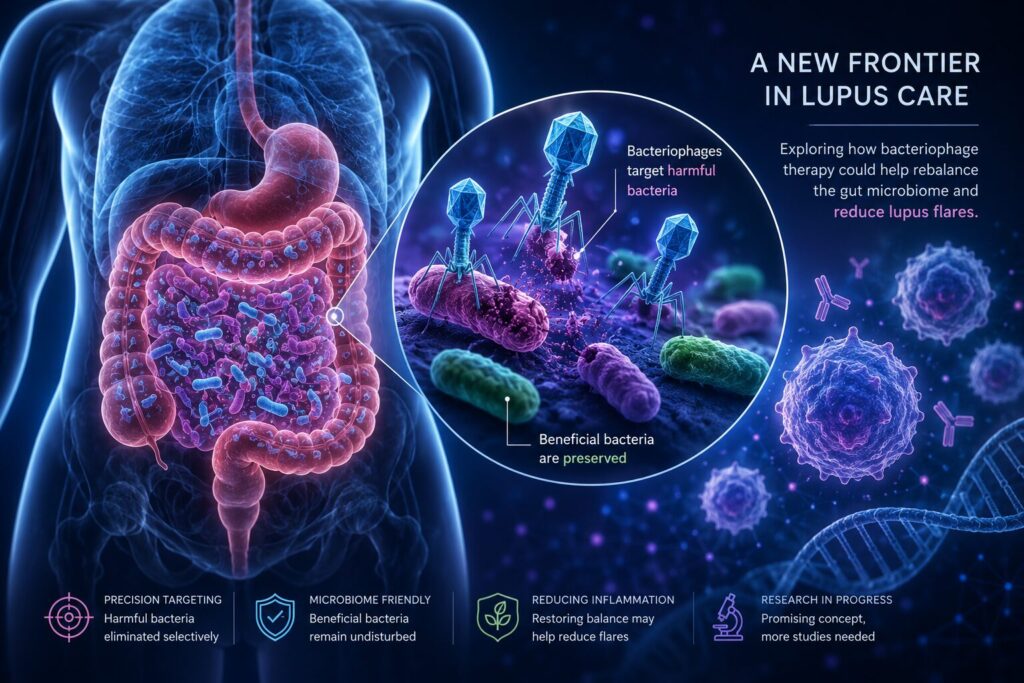
Now, an emerging research concept raises an exciting question: Could bacteriophages, nature’s bacteria-killing viruses, be used to selectively target harmful gut bacteria linked to lupus?
Why the Gut Matters in Lupus
The gut is home to trillions of microorganisms that help regulate digestion, metabolism, and immunity. In people living with lupus, studies have shown that this delicate microbial balance is often disrupted.
Certain bacterial species appear to become more abundant, while beneficial microbes decline. This imbalance, known as dysbiosis, may contribute to chronic inflammation and immune system activation.
Although scientists are still working to identify the exact bacteria involved, the connection between the gut microbiome and lupus continues to strengthen.
Where Do Bacteriophages Fit In?
Unlike antibiotics, which often eliminate both harmful and beneficial bacteria, bacteriophages are remarkably specific. Each phage targets only particular bacterial strains.
Researchers have proposed that if bacteria responsible for worsening lupus can be identified, specially selected phages could be used to remove only those microbes while preserving the rest of the gut microbiome. This precision makes phage therapy an exciting area of investigation for autoimmune diseases.
Promising… But Still Early
A recent research poster presented on Cureus explores this concept, suggesting that phage therapy could become a future strategy for targeting gut bacteria associated with lupus flares. However, it’s important to keep expectations realistic.
At present:
- There are no approved phage therapies for lupus.
- No clinical trials have yet demonstrated that phages can prevent lupus flares.
- Much more research is needed to identify the bacterial targets, develop effective phages, and establish long-term safety.
Looking Ahead
The idea of treating autoimmune diseases by reshaping the gut microbiome represents a shift toward precision medicine. Instead of broadly suppressing the immune system, future therapies may one day focus on correcting specific microbial imbalances.
While phage therapy for lupus remains in the research stage, studies like these highlight the expanding possibilities of microbiome-based medicine.
As our understanding of the gut-immune connection grows, bacteriophages may become valuable tools, not only against bacterial infections but also in managing complex immune-mediated diseases.
Find the original article here
For more phage-related latest news and research on bacteriophages, head here




Leave a Reply
You must be logged in to post a comment.