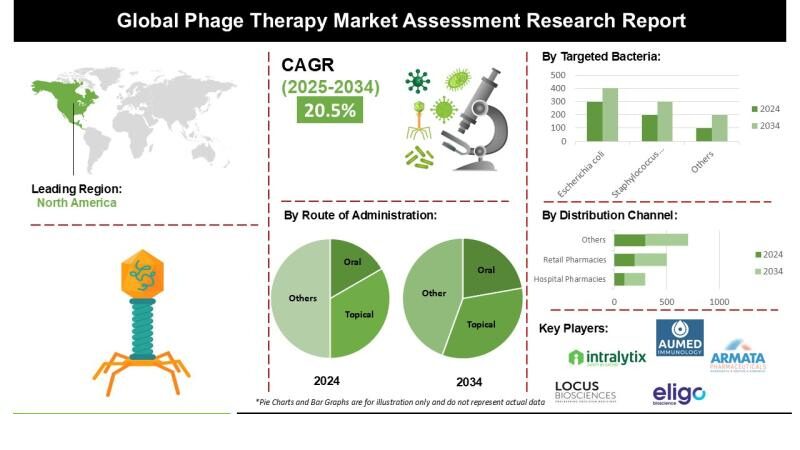
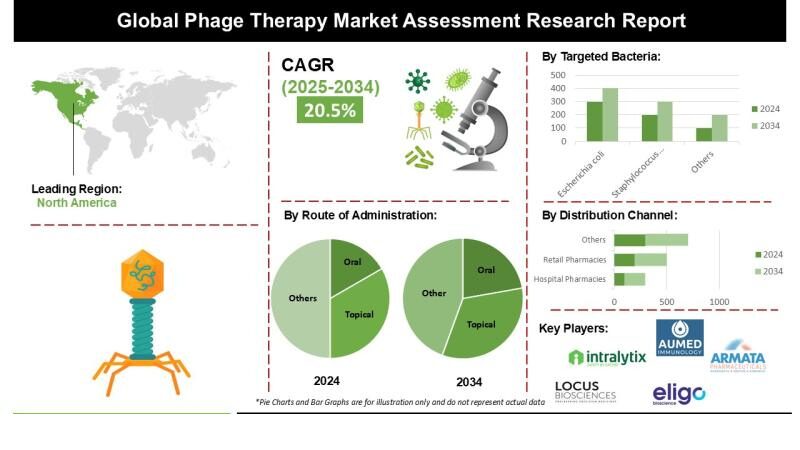
The global healthcare landscape is witnessing a powerful resurgence of an old yet revolutionary concept—phage therapy. According to a new market intelligence report by InsightAce Analytic Pvt. Ltd., the global phage therapy market is projected to grow at a remarkable CAGR (Compound Annual Growth Rate) of about 21% from 2026 to 2035, signaling a major shift in how bacterial infections may be treated in the future.
As antibiotic resistance reaches alarming levels worldwide, phages—viruses that precisely infect and destroy bacteria—are emerging as one of the most promising alternatives in modern medicine.
What’s Fueling the Phage Therapy Market Boom?
Several converging forces are accelerating the adoption of phage-based therapeutics, such as,
- Rising global incidence of infectious diseases
- Escalating antimicrobial resistance (AMR) due to antibiotic overuse
- Shift toward personalized and precision medicine
- Growing patient populations requiring targeted antimicrobial solutions
- Development in biotechnology
Unlike broad-spectrum antibiotics, phage therapy offers high specificity, minimizing damage to beneficial microbiota and reducing side effects—an advantage that is capturing the attention of clinicians and researchers alike.
Market Challenges Still Remain
Despite its promise, phage therapy faces major hurdles that must be overcome for widespread clinical adoption. The report includes some hurdles:
- Limited large-scale clinical data
- Absence of globally harmonized regulatory pathways
- Unclear approval frameworks compared to conventional antibiotics
- Public and clinical hesitation toward virus-based therapies
These challenges underscore the urgent need for regulatory clarity, standardized manufacturing protocols, and robust clinical trials.
Opportunities Shaping the Future of Phage Therapy
The road ahead is filled with opportunities as innovation accelerates. Primarily, increased funding and strategic investments by biotech leaders are needed, along with advancements in engineered and synthetic phages. Phage therapy should be expanded into oncology, microbiome modulation, and biotherapy. Finally, phage therapy can be applied beyond healthcare, including environmental sanitation and food safety.
With growing R&D momentum, phage therapy is steadily transitioning from experimental use to mainstream clinical pipelines.
Key Industry Players in Competitive Landscape
The global phage therapy market features a dynamic mix of clinical-stage innovators and established biotech firms, including: Armata Pharmaceuticals • Adaptive Phage Therapeutics • AmpliPhi Biosciences • BiomX (MBcure Ltd.) • Pherecydes Pharma • Eligo Bioscience • Intralytix • Locus Biosciences • TechnoPhage • PhagoMed Biopharma • SNIPR BIOME • Phagelux • Microgen (Russia), among others.
These companies are actively shaping the future of phage-based medicines through clinical trials, mergers, and technology advancements. Further advancements are expected through stronger collaborative partnerships between industry and academia.
North America Leads the Charge
North America is expected to record the highest growth rate during this forecast period, supported by:
- A robust biotech ecosystem
- Strong R&D funding
- Progressive regulatory initiatives
- Growing acceptance of innovative biologics
The region continues to act as a global hub for phage research and commercialization, says the report.
A Powerful Weapon Against the Antibiotic Resistance Crisis
As the world urgently searches for alternatives to failing antibiotics, phage therapy is no longer a fringe concept—it is fast becoming a cornerstone of next-generation antimicrobial strategies. With rising investments, accelerating clinical trials, and growing regulatory interest, the phage therapy market will redefine how bacterial infections are treated over the next decade.
For more phage-related updated news articles, check here