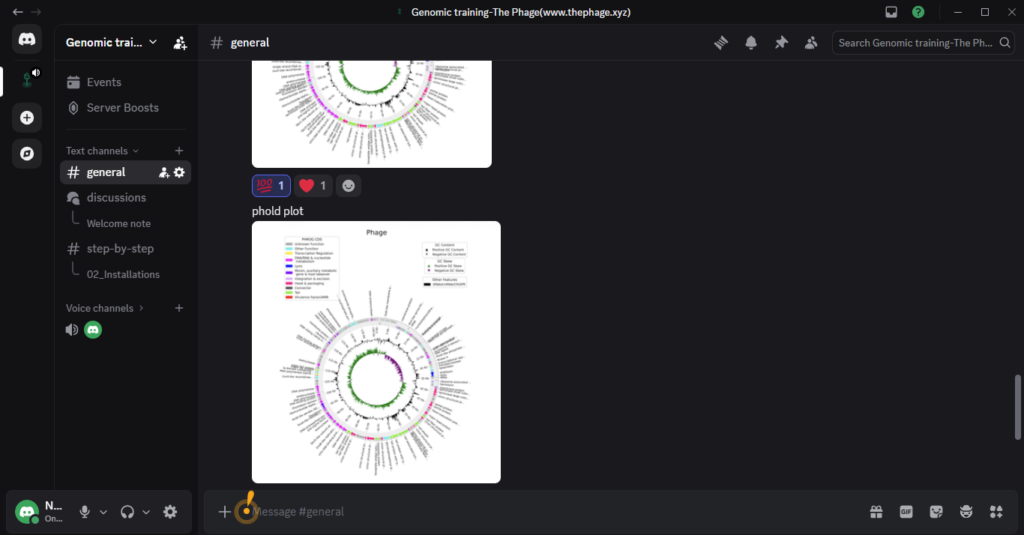
When we first planned our Introduction to Phage Bioinformatics programme, our aim was quite simple: we wanted beginners to actually try bioinformatics rather than just hear about it.
Phage research is becoming increasingly connected with genome sequencing and computational analysis. But for someone coming from a microbiology or life-science background, getting started with bioinformatics can feel overwhelming.
There are new tools to learn, command lines to understand, software to install and, sometimes, a lot of troubleshooting before you even get to the actual analysis.
So, instead of making the first programme heavily theoretical, we decided to make it hands-on from the beginning.
What We Did in the Introductory Training
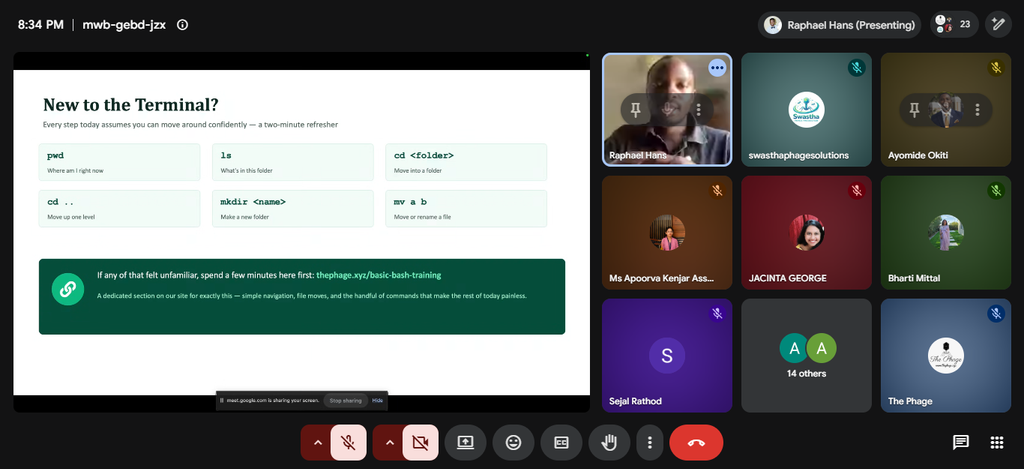
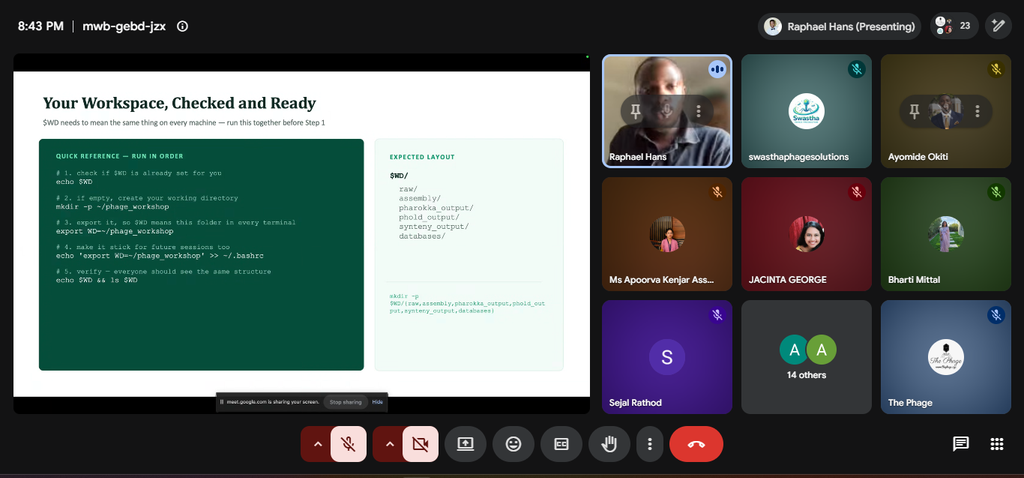
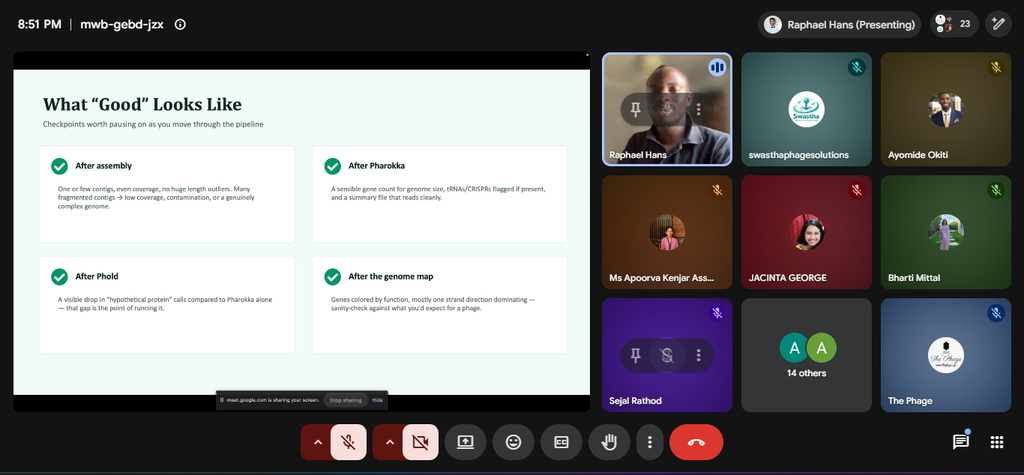
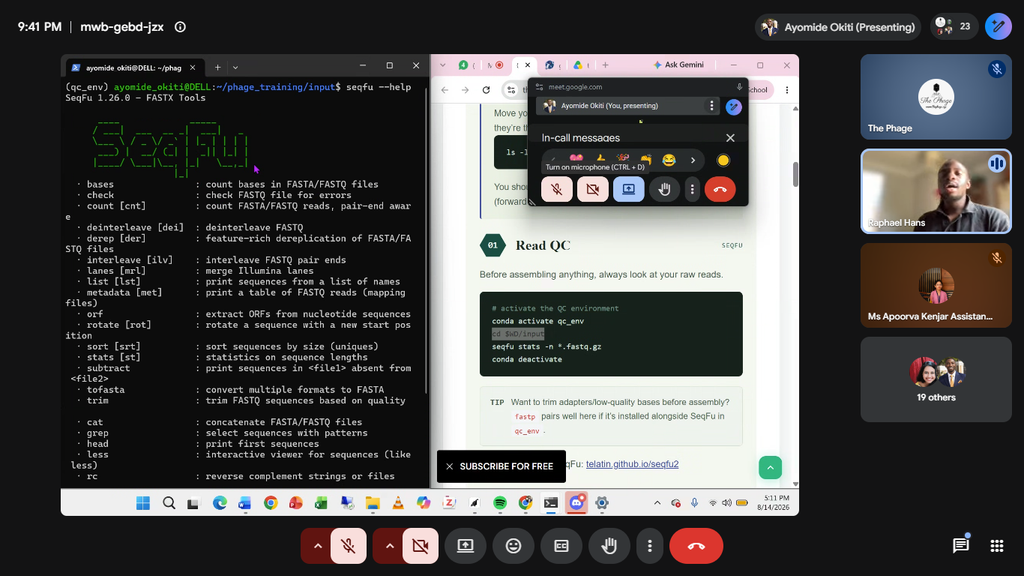
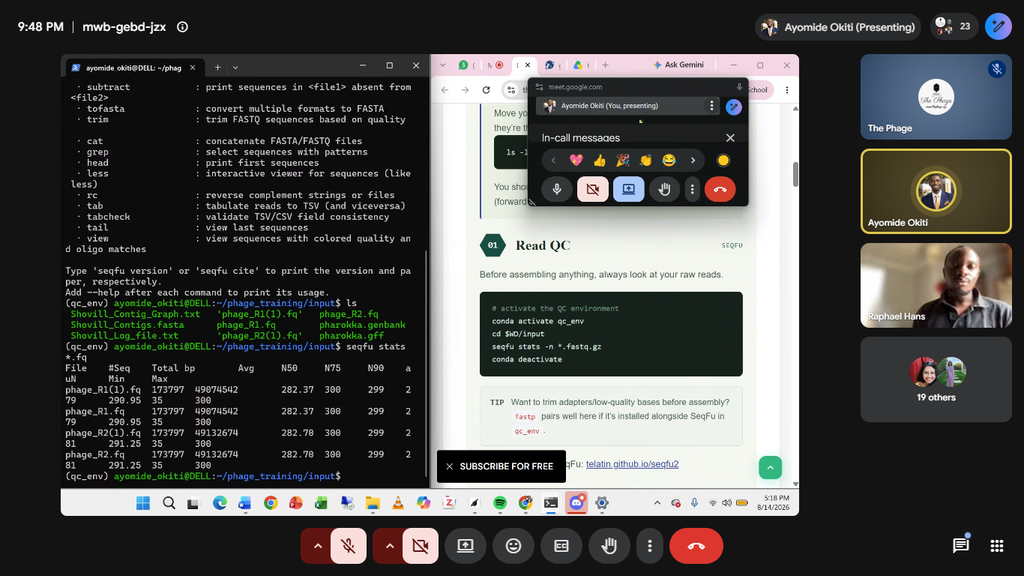
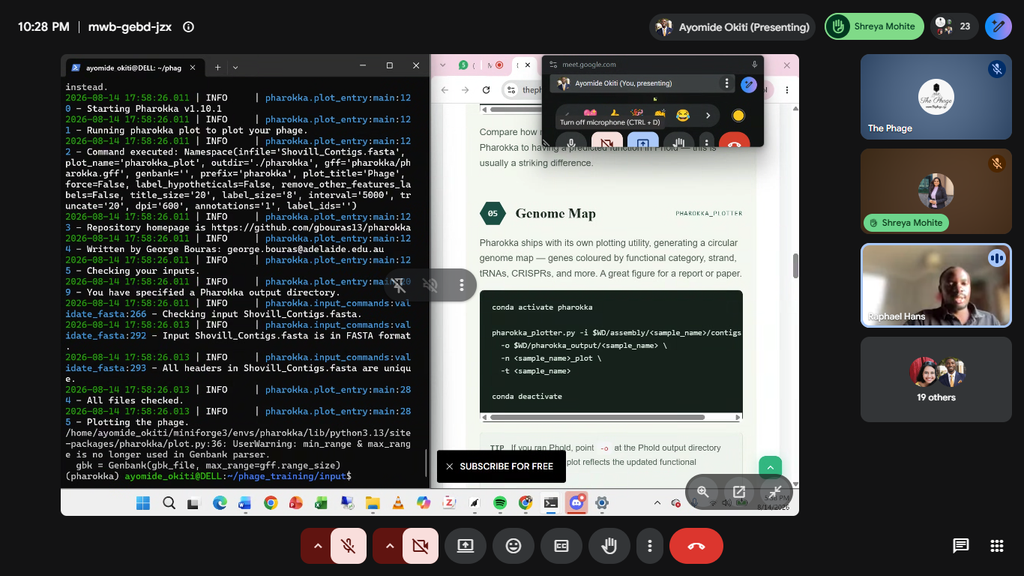
The programme was conducted as a two-day live hands-on training on Google Meet in collaboration with Swastha Phage Solutions Pvt Ltd.
The participants were guided through the workflow step by step, with a focus on understanding what they were doing rather than simply following instructions. One of the important practical components was phage genome gene annotation.
For beginners, gene annotation can initially look complicated. There are tools, outputs and terminology that may be completely unfamiliar. Our approach was to break the process down into smaller steps and explain each stage along the way.
The participants could follow the demonstration, perform the steps themselves and ask questions during the session. And that was an important part of the training.
“We wanted participants to do the work themselves“.
The Training Started Before the Workshop
One thing we learned very quickly was that a hands-on bioinformatics workshop cannot really begin on Day 1. The participants first need a working computational environment.
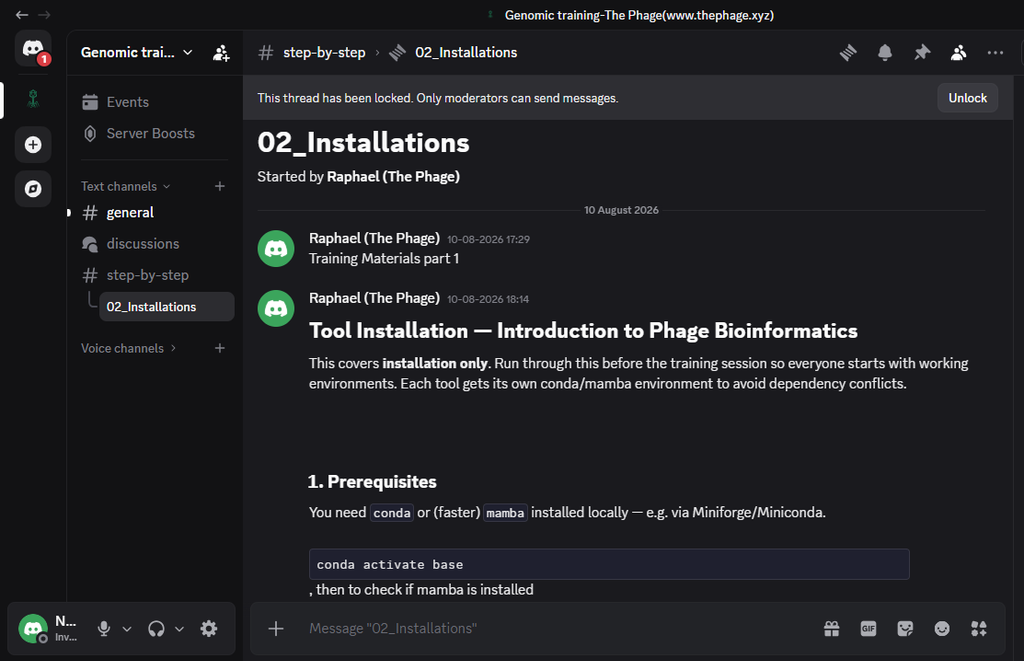
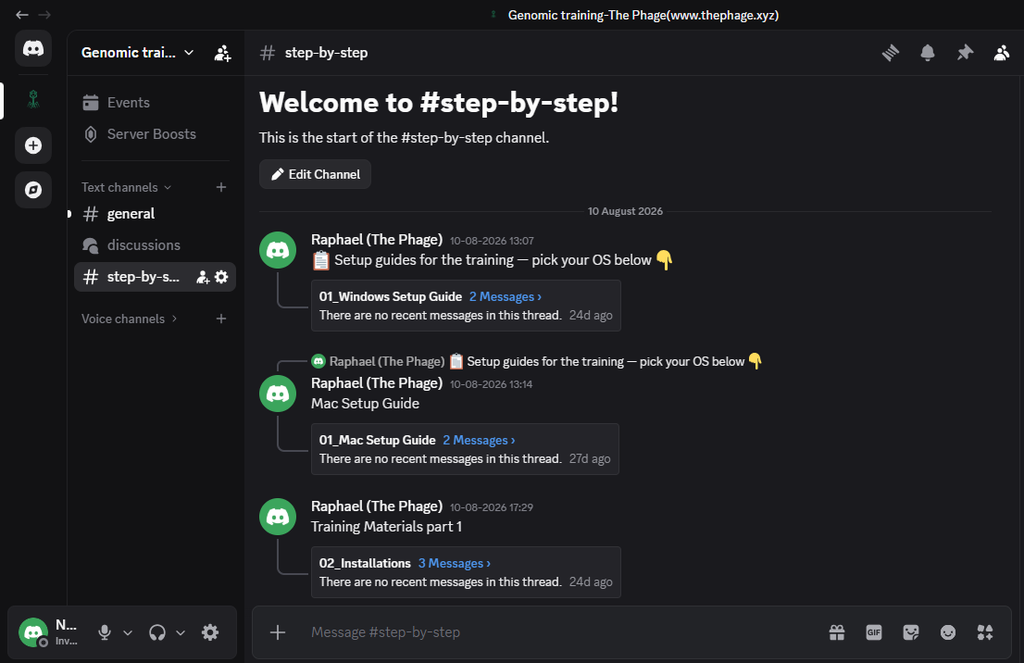
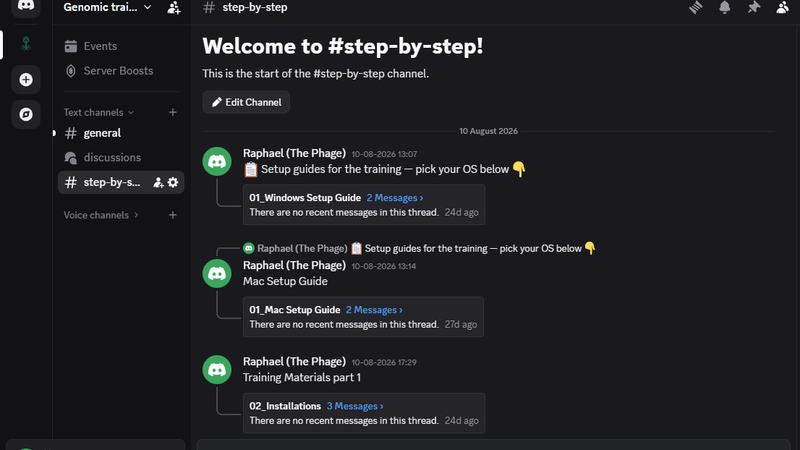
For those using Windows systems, we provided guidance for setting up WSL (Windows Subsystem for Linux) before the workshop.
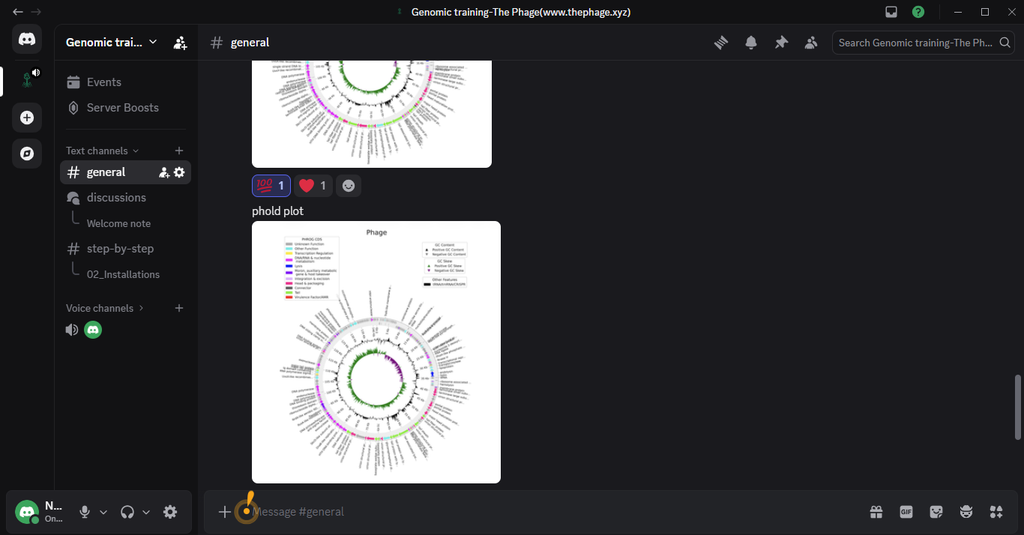
We used Discord to provide step-by-step installation assistance and help participants resolve issues they encountered while setting up their systems. This turned out to be an important part of the programme.
Instead of waiting until the live session to discover that a tool was not installed or a command was not working, participants had an opportunity to get their systems ready beforehand.
Two Days of Learning, Questions and Hands-On Work
The two live sessions included presentations, live demonstrations, questions, troubleshooting and, most importantly, participants working through the steps themselves.
For us, this was also an opportunity to see where beginners usually get stuck.
Some challenges were related to installation and commands. Others were simply about understanding what a particular step meant and why it was necessary.
That experience was valuable.
It showed us that introducing someone to bioinformatics means not only giving them a list of tools but also to explain the process, answer questions and help them understand what is happening at each stage.
What We Learned From the First Programme
Our introductory training gave us a clearer idea of what beginners actually need.
A short workshop can introduce the workflow and give participants their first practical experience. But there is only so much that can be covered in two days.
There is much more to phage bioinformatics than performing one genome annotation workflow.
There are computational basics to understand, different types of analyses to explore, tools to become familiar with and, most importantly, biological results that need to be interpreted correctly.
That is what led us to our next step.
We Are Now Going Deeper
We are currently organizing a full certification course in Phage Bioinformatics for beginners.
This will be different from the introductory workshop. The earlier program was designed to give participants their first hands-on experience.
The new certification course is being developed to give beginners a much deeper understanding of phage bioinformatics, with more time devoted to both concepts and practical work.
We want participants to understand not only which tool to use, but also:
- Why the analysis is being performed
- What happens at each stage
- How to work with phage genome data
- How to interpret the results
- Where different bioinformatics tools fit into the overall workflow
- How computational analysis connects back to phage biology
The course will start from the basics and gradually move into more detailed practical work, so that participants are not expected to already be bioinformatics experts.
Who Is This Course For?
The course is intended primarily for beginners from biological and life-science backgrounds.
This could include students, researchers and professionals working in:
- Microbiology
- Biotechnology
- Molecular biology
- Life sciences
- Phage research
- Biomedical sciences
- Related fields
If you have a biological background but have always felt that bioinformatics was difficult to approach, this course is being designed with that exact challenge in mind.
This time, we want to go beyond an introduction.
We want to give participants enough time to understand the fundamentals, work through practical exercises and gradually become more comfortable with phage genome analysis.
More information about the course curriculum, duration, practical sessions, certification, schedule and registration will be announced soon.
If phage bioinformatics is something you have been wanting to learn, this could be a good place to start.
Follow the phage for updates on the upcoming certification programme.


Leave a Reply
You must be logged in to post a comment.